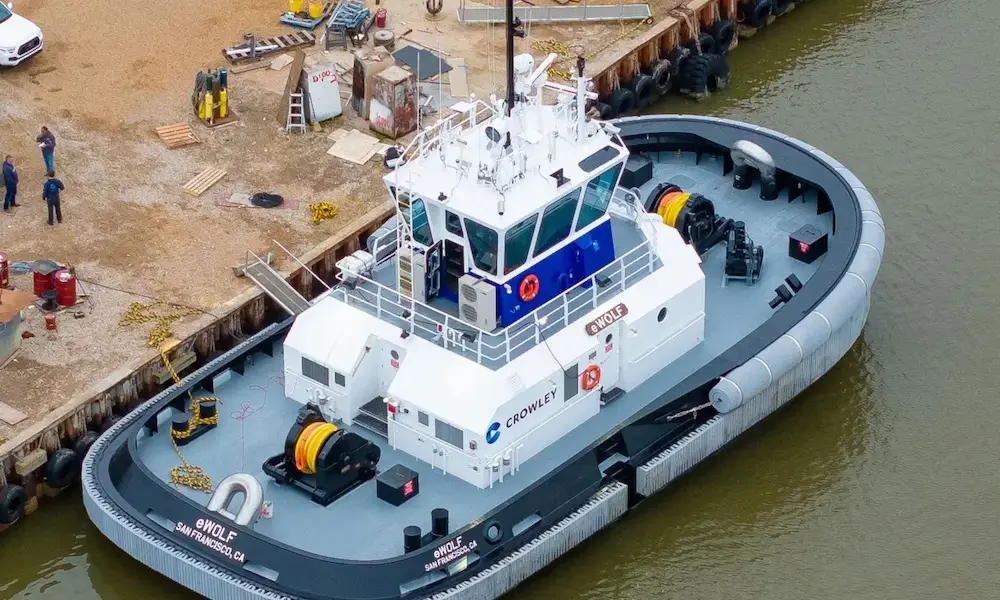
In a groundbreaking achievement for the maritime industry, MDH International has successfully retrofitted one of its tugboats to operate on ammonia, a fuel known for its zero carbon emissions. This major milestone, which was achieved after months of meticulous planning and engineering, marks a significant step forward in the company's commitment to achieving net-zero emissions by 2050.
Ammonia, a colorless gas typically used in industrial processes, has gained attention as a potential alternative fuel for ships due to its carbon-neutral properties. When burned in an engine, ammonia produces no direct CO2 emissions, making it an ideal candidate for the shipping industry, which has been under increasing pressure to reduce its carbon footprint.
The successful sea trial was hailed by maritime authorities as a landmark event in the transition toward sustainable shipping. Engineers involved in the project praised the tugboat's performance during the trial, noting that the vessel's engine ran smoothly on ammonia with no signs of operational issues. The trial also demonstrated that the tugboat could achieve the necessary power output for its typical operations while maintaining environmental benefits.
In addition to the ammonia fuel retrofit, MDH International has integrated cutting-edge monitoring systems aboard the tugboat to track fuel consumption and emissions data in real-time. These systems will help ensure that the tugboat maintains optimal fuel efficiency and environmental compliance during its operations.
This innovative step opens the door for future zero-emission vessel conversions, which could revolutionize the maritime industry's approach to sustainable shipping. The successful operation of an ammonia-powered tugboat proves that the technology is ready for implementation on a larger scale, offering a viable pathway to decarbonizing the global fleet.